

Organic Cotton Pads for Sensitive Skin: What to Know
Quick Summary
Organic cotton pads suit sensitive skin mainly because they reduce exposure to synthetic fibres and processing chemicals while letting air circulate and keeping moisture away from the body. Breathable cotton helps warmth and dampness build up more slowly than plastic-backed disposables. Check the organic and unbleached claims against a recognized certifier, since chemical-free is not a guarantee of irritation-free.
- Cotton breathes better than most synthetic materials, which matters for reactive skin.
- Organic and unbleached are separate claims, so ask for the certification behind the word.
- Friction, trapped moisture and residues from processing are the main irritants for sensitive skin.
- Rinse soiled pads in cold water and avoid fabric softener to protect absorbency and skin.
- Choose unbleached, fragrance-free cotton over bamboo viscose, which involves chemical-intensive processing.
Table of Contents
- Why Organic Cotton Pads Suit Sensitive Skin
- How Organic Cotton Pads Affect Vulvar Health and pH Balance
- Organic Cotton vs Bamboo Pads: Which Suits Sensitive Skin Better
- Hypoallergenic Period Products: What to Look For
- Choosing the Right Pad Size and Absorbency for Your Flow
- How to Wash Reusable Organic Cotton Pads Without Irritating Skin
- Cost Per Cycle and Disposal: Reusable Pads Compared to Disposables
- Building a Starter Set for Sensitive Skin
- Frequently Asked Questions
Organic cotton pads are often the first thing people reach for when their skin reacts to disposable products, and for good reason. A pad made from unbleached, untreated cotton avoids many of the fragrances, bleaching agents and synthetic top sheets that can irritate sensitive skin. That said, "organic" and "chemical-free" are marketing terms before they are guarantees, and it is worth knowing what each one actually covers. Bluebird Pads builds reusable organic cotton cloth pads and absorbent underwear, and this guide explains how to judge them for yourself.
Sensitive skin reacts to friction, moisture that stays trapped, and residues left by processing. The Canadian government's guidance on menstrual products in general points buyers toward ingredient lists and manufacturer disclosures, and Health Canada's guidance on consumer health products is a useful place to start if you want the official framework.
Why Organic Cotton Pads Suit Sensitive Skin
Cotton is a natural fibre that breathes better than most synthetic materials, which matters when skin is already reactive. Organic cotton is generally grown without synthetic pesticides or fertilizers. Here is the core answer: organic cotton pads suit sensitive skin mainly because they reduce exposure to synthetic fibres and processing chemicals while still holding moisture away from the body.
Breathability is the practical benefit most people notice first. A cotton top layer lets air move, so warmth and dampness build up more slowly than under a plastic-backed disposable.
What the Organic and Unbleached Labels Actually Mean
"Organic" usually refers to how the cotton was grown, while "unbleached" refers to whether it was whitened after processing. These are separate claims, and a pad can carry one without the other. Ask for the certification behind the word. Look for organic claims that are backed by a recognized certifier rather than a vague label.
Unbleached cotton skips chlorine or peroxide whitening, which means it arrives in a natural cream or tan colour. Many people with sensitive skin prefer this, but it does not automatically make a pad hypoallergenic.
Chemical-Free Does Not Mean Irritation-Free
Everything is made of chemicals, so "chemical-free" is a shorthand rather than a literal promise. A pad can be entirely cotton and still irritate skin through friction, poor washing, or a dye or snap fastener that touches the body. A common mistake is assuming that switching materials alone will end irritation. Often the fix is also about washing, and the washing and care instructions for stains, detergent and drying cover that routine. Often the fix is also about fit, washing routine and how long a pad stays damp.
How Organic Cotton Pads Affect Vulvar Health and pH Balance
The vulva and vagina maintain a slightly acidic environment, and the balance of bacteria living there plays a role in comfort.
A pad does not sit inside the vagina, so it cannot directly change vaginal pH. Breathable materials can help keep the skin surface drier between changes, while a plastic backing and synthetic top sheet tend to hold heat and moisture against the skin.
Residues matter too. Fragrances, dyes and some bleaching by-products can irritate reactive skin, so choosing unbleached, fragrance-free cotton reduces that exposure.
Watch out: a pad that stays damp for hours, whether cloth or disposable, undermines the breathability advantage. Change frequency matters as much as material. A damp pad should not stay against the skin longer than necessary.
Be careful with the claims you read online. A breathable, residue-light pad can help avoid adding irritants and reduce warm, damp conditions. If you notice persistent itching, odour or discharge changes, speak to a healthcare professional rather than changing products indefinitely.
Organic Cotton vs Bamboo Pads: Which Suits Sensitive Skin Better
Organic cotton and bamboo are both popular in reusable products, and they behave differently. Cotton is familiar, soft, and widely tested for skin contact. Bamboo is marketed as naturally antibacterial and very soft, but many bamboo textiles are heavily processed into a viscose or rayon form, and that processing can involve chemicals. The fabric is often less breathable than it is sold as being.
Hemp is a third option that gets less attention. It is durable and absorbent but can feel stiffer against sensitive skin until it is well washed.
For most people with reactive skin, organic cotton is the safer default because its processing is simpler and easier to verify. If a bamboo product is offered, check whether it is listed as bamboo fibre or bamboo viscose, since the two differ significantly.
Fabric |
Breathability |
Processing Concern |
Best For |
|---|---|---|---|
Organic cotton |
High |
Minimal if certified |
Sensitive or reactive skin |
Bamboo viscose |
Moderate |
Chemical-intensive processing |
Softness-first buyers |
Hemp |
High |
Stiff until broken in |
Durability and absorbency |
Hypoallergenic Period Products: What to Look For
"Hypoallergenic" has no single regulated definition for menstrual products, so treat it as a starting point rather than proof. Look for specific details: the fabric composition, whether dyes or fragrances are used, and whether the manufacturer discloses testing.
Practical checks include a fragrance-free label, a plain cotton top layer, and snap fasteners made from materials the maker names. If a product lists none of these details, you cannot judge whether it is hypoallergenic, and that uncertainty is worth factoring into your decision.
Choosing the Right Pad Size and Absorbency for Your Flow
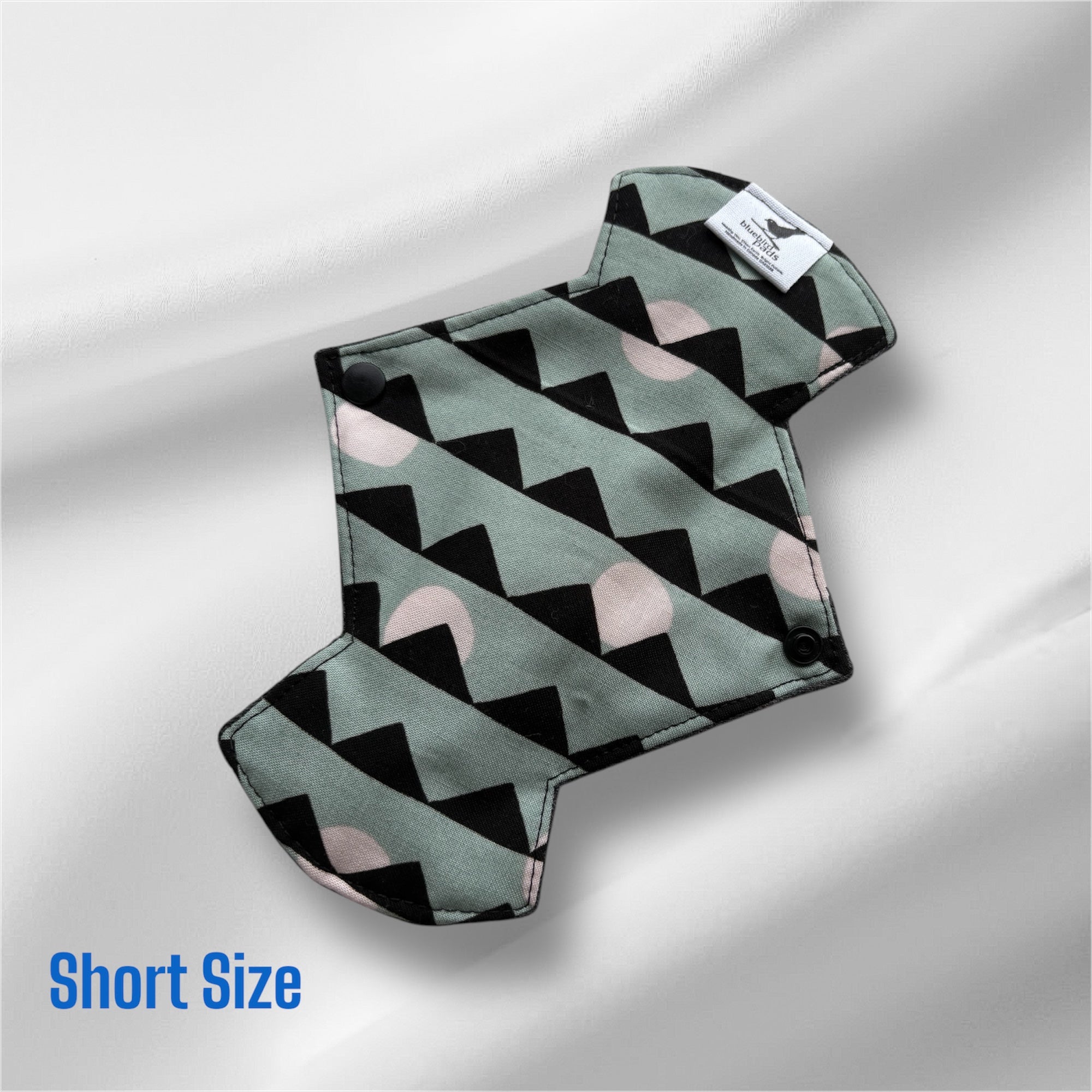
Sizing affects both protection and friction. A pad that is too short leaves gaps, while an oversized one rubs. Bluebird Pads offers the Short 7 1/2″ Reusable Organic Cotton Pad for lighter daily use, which is lightweight and designed for comfortable daytime wear. For a heavier or longer flow, the Long 9″ Reusable Absorbent Pad gives more coverage as a higher-absorbency option.
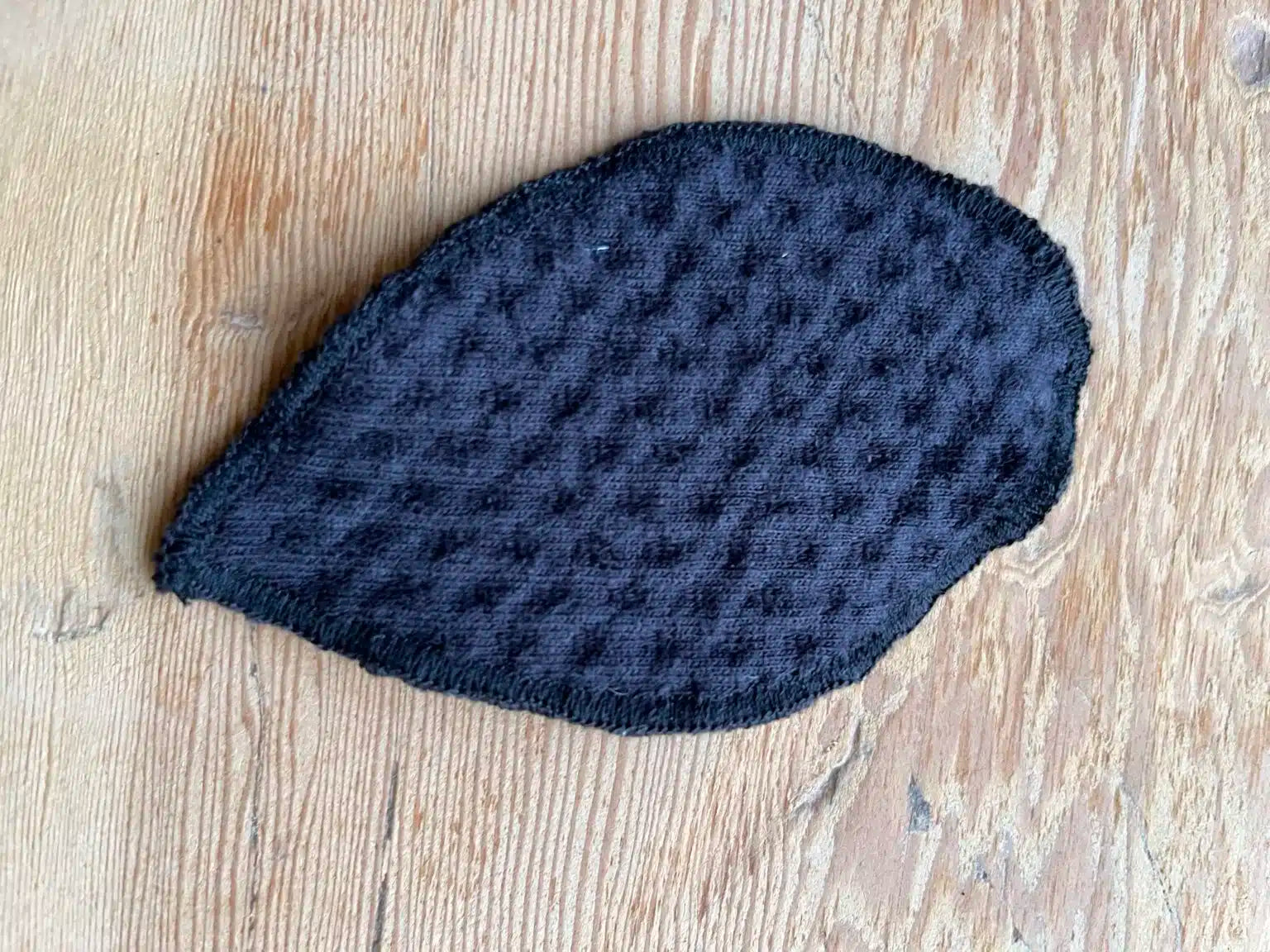
If you bleed heavily, a single pad may not carry you through the first hours. A main pad can be combined with an extra absorbent layer, and the Interlabial Pads are designed for external use as added absorbency support alongside a reusable pad. Keep in mind that a cloth pad's real capacity depends on fit and how often you change it, not only on its label.
How to Wash Reusable Organic Cotton Pads Without Irritating Skin
Washing is where many reusable routines go wrong. Rinse soiled pads in cold water soon after use, because hot water can set stains and blood proteins. Then use a mild, fragrance-free detergent and avoid fabric softener, which coats fibres and reduces absorbency.
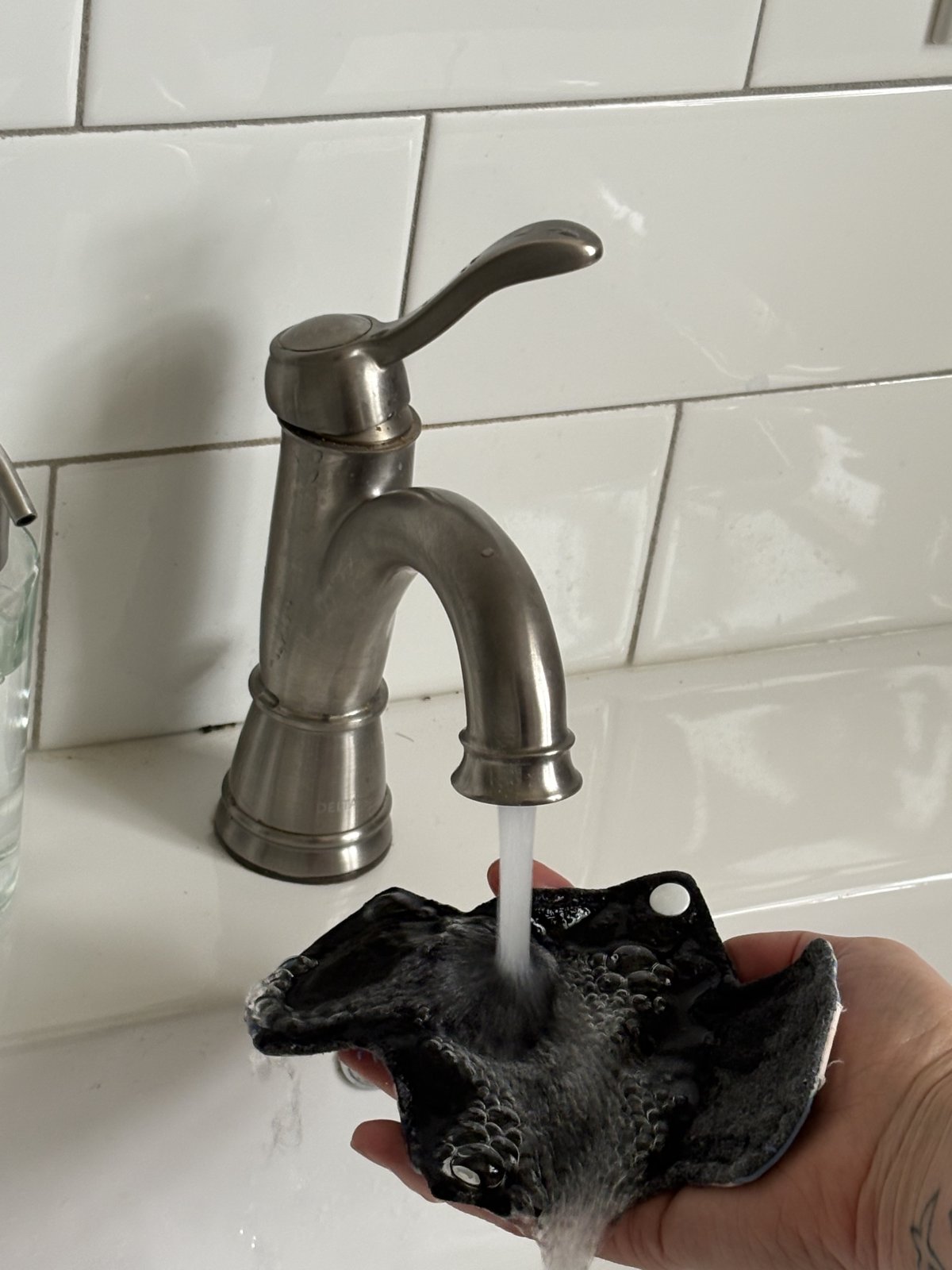
!Hands rinsing a folded organic cotton pad in a bathroom sink under cool running water, with a laundry bag and mild soap on the counter
Machine wash cold, then air dry or tumble dry on low. For the complete care routine, read How to Wash and Care for Reusable Cloth Pads.
Cost Per Cycle and Disposal: Reusable Pads Compared to Disposables
The premium price is the most common objection to reusable pads, and it deserves an honest breakdown rather than a slogan. For a deeper side-by-side look at options, see the practical buying guide to the best cloth pads for perimenopause. A single Short 7 1/2″ Reusable Organic Cotton Pad is priced at $20.00 CAD. A disposable pad typically costs a fraction of that per unit, so the upfront gap is real. The question is what happens over a year of cycles.
A workable way to compare is cost per cycle rather than cost per pad. Estimate how many pads you use across one period, then multiply by the number of cycles you have in a year. A person who uses, say, four pads a day across five days is looking at roughly twenty pad-changes per cycle. With disposables, that is twenty units bought and thrown away every cycle, every month. With reusables, that same twenty-change cycle is covered by a starter set that gets washed and reused, so the cost is front-loaded and then flattens out.
The break-even point depends on three things: how many pads you buy, how well you care for them, and how long they last. Reusable pads are designed to be washed and reused, which is where the long-term saving comes from. Poor care, hot water, fabric softener, high heat drying, shortens that life and erodes the value case.
Watch out: the per-cycle math only works if you actually build a set sized to your flow. Buying too few pads leads to constant laundry and frustration; buying too many ties up money in pads you rarely use. A small mixed set is usually the better first purchase.
Disposal is the other half of the comparison. Disposables generate waste every cycle, and that waste is a recurring environmental cost rather than a one-time one. Reusables avoid it, though they add laundry and water use, a trade-off worth naming honestly rather than hiding.
For reusables at end of life, the material matters. Before composting any pad, check what the backing and fasteners are made of, and remove any components that will not degrade.
For a fuller comparison of buying options, the guide to the best cloth pads for perimenopause walks through the trade-offs in depth.
Building a Starter Set for Sensitive Skin
Start with a small mix rather than a full wardrobe. Choose one or two daytime pads for lighter days, one higher-absorbency option for heavier flow, and a set of liners for the in-between days. The Super Plus Starter Kit is a curated bundle built around this idea, so you do not have to assemble the pieces separately.
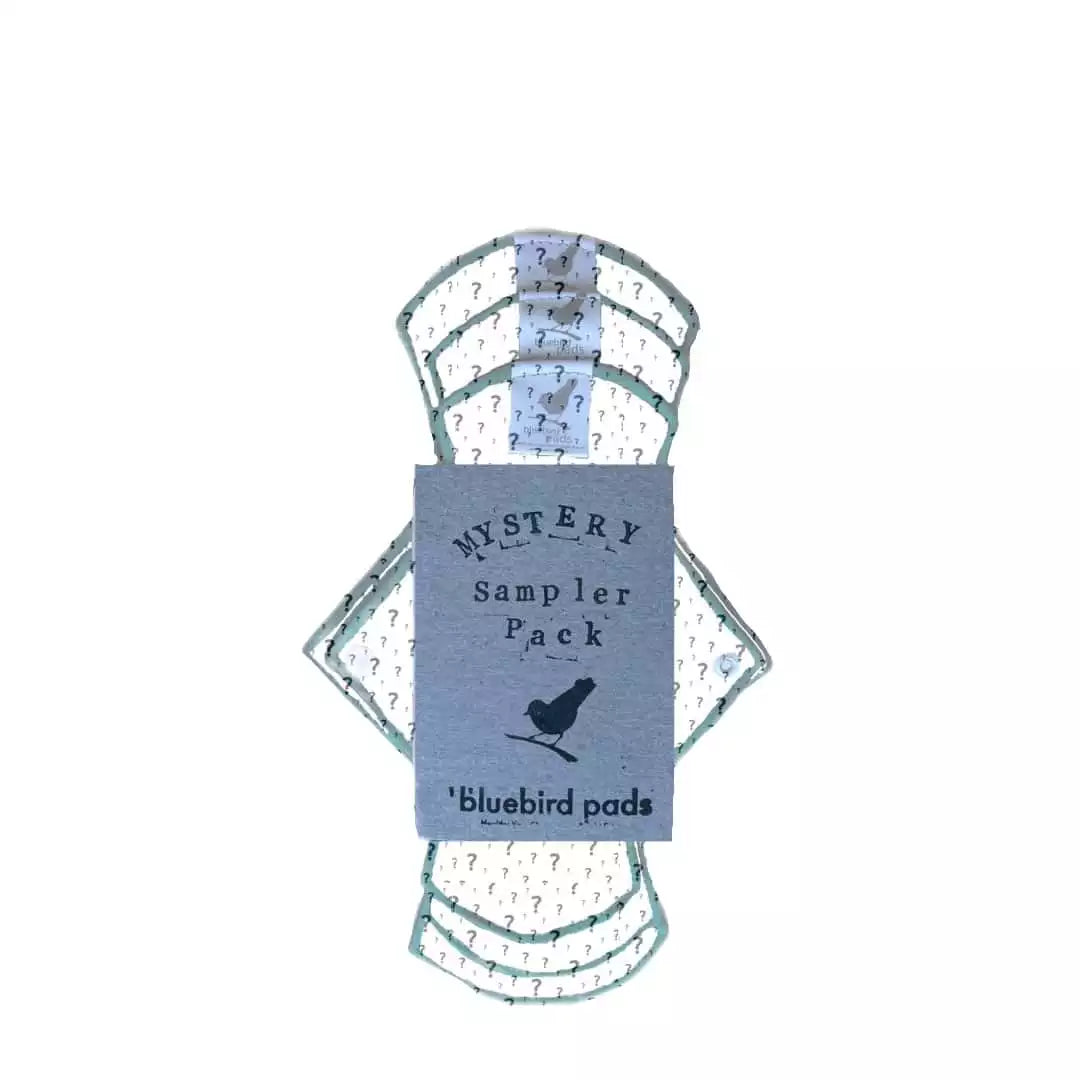
If you prefer to test sizes first, the Reusable Pad Mystery 3 Pack at $61.00 CAD includes three sizes so you can see which fit suits your flow before committing to a full set. Watch for skin reactions in the first few cycles.
Frequently Asked Questions
Are organic cotton pads better for sensitive skin?
For many people with sensitive skin, organic cotton pads are a gentler choice than conventional disposables. Organic cotton is grown without synthetic pesticides, and Bluebird Pads uses unbleached cotton. Breathable natural fibres also reduce trapped moisture, a common trigger for itching. Results still vary by person, so patch testing a new pad on a small area for a day before full use is a sensible first step.
Do organic cotton pads contain chemicals or fragrances?
Bluebird Pads reusable organic cotton pads are made from organic cotton, according to their product listings. Many disposable pads, by contrast, use plastic-based top sheets, adhesives and fragrance. Check the listing or ask the seller for the full material breakdown of any product before buying, since ingredient details can differ between brands and styles.
What is the difference between organic cotton and bamboo pads?
Organic cotton is a natural fibre that is soft, breathable and widely used in sensitive-skin products. Bamboo fibres are often processed into viscose, a chemically intensive process, so bamboo pads are not automatically gentler or more sustainable. For people with sensitive skin, the processing method and the presence of added finishes matter more than the plant name on the label.
How do I know if my period pads are causing skin irritation?
Signs of irritation from a pad include itching, burning, redness, small bumps or a rash on the vulva or inner thighs that appears during or shortly after wear. If symptoms keep returning with the same product, try switching to a different material and see whether the problem stops. Persistent or severe symptoms, or any sores, should be assessed by a doctor or pharmacist, who can rule out infection or another cause.
How many organic cotton pads do I need for a full cycle?
Most people need between six and ten pads per day on heavier days and fewer on lighter days, so a full cycle often requires around 15 to 20 pads when you add a spare set for washing. Bluebird Pads' Reusable Pad Mystery 3 Pack costs $61.00 CAD and includes three sizes, a practical starting point for testing what suits your flow. Rinsing pads promptly after use keeps the wash load manageable between cycles.
